


New Energy
Innovation and Implementation for Sustainable Energy Systems
The global energy transition is creating entirely new markets for technologies, infrastructure, and industrial solutions. We help companies identify growth opportunities, evaluate emerging technologies, and successfully position themselves in future energy markets.
Our focus combines sustainability, economic viability, and industrial scalability. We support companies in transforming energy-intensive industries, developing decentralized energy systems, and unlocking new business opportunities in rapidly growing markets such as AI data centers, hydrogen, and industrial electrification.


Strategic Innovation & Technology Consulting

Market Entry & Growth Strategy

Industrialization & Implementation Support

Energy Transformation Coaching
Our Areas of Expertise
AI Data Centers
Artificial intelligence is driving unprecedented growth in data center construction worldwide. These facilities are becoming one of the most important markets for future energy technologies, creating new demand for power infrastructure, cooling solutions, energy storage, heat recovery, and resilient energy systems. This positioning aligns with our current consortium and market activities around data centers and decentralized energy systems.
We support companies in identifying opportunities along the entire data center value chain. Typical focus areas:
- Power supply and grid integration
- Liquid cooling and thermal management
- Battery storage and backup power solutions
- Waste heat utilization
- Power electronics and electrical infrastructure
- Circular economy and sustainable hardware concepts
Decentralized Energy Systems
Future energy systems will be modular, scalable, and increasingly decentralized. We help companies identify opportunities in emerging energy ecosystems and develop solutions that combine resilience, sustainability, and business value.
This reflects our work in microgrids, energy storage, renewable integration, and energy security concepts. Typical focus areas:
- Microgrids
- Energy storage systems
- Renewable energy integration
- Energy resilience strategies
- Local energy communities
- Digital energy management
Hydrogen
Hydrogen remains a critical enabler for industrial decarbonization and energy security. We support companies in defining their strategic role within the hydrogen economy and identifying attractive market opportunities across the value chain.
Typical focus areas:
- Electrolyzers
- Hydrogen infrastructure
- Fuel cells
- Hydrogen logistics
Industrial Electrification & Sustainable Heat
Electrification is a key pathway toward climate-neutral production. We identify technologies and business models that allow companies to reduce emissions while improving competitiveness.
Typical focus areas:
- High-temperature heat pumps
- Electric process heating
- Thermal energy storage
- Industrial heat networks
Selected Projects

LH₂ Container Logistics – Establishing a Scalable Hydrogen Transport Chain
The “Mini-Reallabor LH₂-Containerlogistik” funding project aimed to demonstrate a prototype for a scalable, intermodal transport chain for liquid hydrogen – from producer to consumer. The focus was on regulatory, technical, and economic framework conditions for the industrial and logistics use of LH₂ and was carried out in collaboration with IFW Dresden and HHLA.
Key elements of the project:
- Analysis of economic efficiency and sustainability along the entire value chain
- Development and evaluation of business cases for LH₂ container logistics
- Identification of regulatory hurdles in hinterland transport (road, rail, inland waterways)
- Derivation of strategic recommendations for action for scaling and market entry

Identification of Future Energy Systems with Focus on Sustainable Heat Provision
In order to achieve a 50 % reduction in CO2 emissions (Scope 1 and 2) by 2030 the different options were to be assessed in terms of ecological and economic impact Our approach was the following.
- Assessment of current energy provision in a Scope 1 and 2 intensive production with production plant visit
- Analysis of fit between technological options and production process
- Demonstrate non-technological, procurement related options
More than 15 different energy system technologies were evaluated economically and ecologically. In addition, the available options were prioritized in terms of the resources required and the achievable impact.

Market Entry Strategy for the High-Temperature Heat Pump Market
As part of a technology-driven innovation project, we partnered with a leading industrial provider of heating and cooling systems to conduct an in-depth analysis of integrating high-temperature heat pumps (HTHP) into energy-intensive production processes. The objective was to identify key levers for decarbonization and assess strategic market entry opportunities.
Results:
- Target Industry Assessment: Dairy and paper identified as particularly attractive industries with high waste‑heat potential and strong innovation readiness.
- Barrier & Solution Analysis: Integration barriers and potential solutions mapped (e.g., modular systems, process proximity, strategic partnerships).
- Strategic Market Entry: Developed a market entry model for HTHP system providers.
- Market Opportunity Modeling: Created a TAM/SAM/SOM-based market entry model for relevant target industries.

Technology Scouting for Future Gasket Materials in Alkaline and PEM Electrolyzer Technologies
The goal was to understand relevant innovation for Alkaline and PEM Electrolyzer technologies with a focus on gasket materials and where the company can create an additional benefits. In this project, we have:
- Validated results with information about materials challenges and white spots in the Alkaline and PEM electrolyzer technologies
- Evaluated and prioritized the biggest potentials for customers
- Defined next steps to establish the company on the market
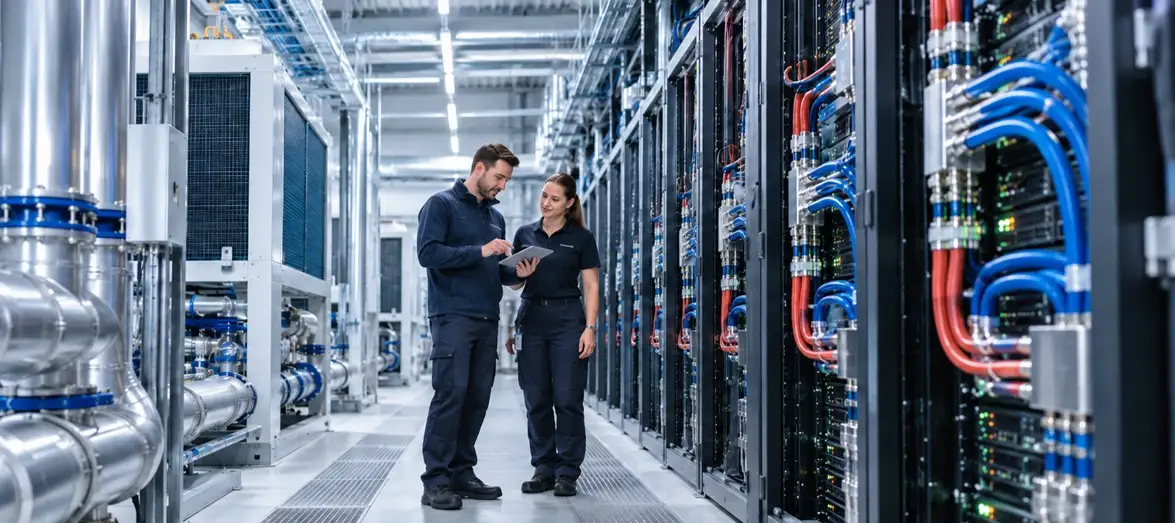
Scaling Data Centers: Exploration Program - Participating in a thriving market ecosystem
As part of a multi-stakeholder exploration program, we analyzed the future development of European data centers with a particular focus on sustainable cooling technologies, high-density computing, artificial intelligence workloads, and scalable infrastructure concepts. The objective was to identify technology trends, market opportunities, and innovation pathways for operators, technology providers, and industrial stakeholders across the data center value chain.
Results:
- Technology Landscape Assessment: Evaluated leading cooling concepts including air cooling, direct-to-chip liquid cooling, immersion cooling, free cooling, and hybrid architectures for different data center segments.
- Market Segmentation & Growth Analysis: Identified key growth segments such as AI-ready hyperscale data centers, colocation facilities, edge data centers, and high-performance computing infrastructures.
- Innovation Opportunity Mapping: Assessed future innovation fields including high-density rack architectures, heat recovery solutions, water-efficient cooling concepts, modular data center designs, and integrated power-and-cooling systems.
- Strategic Ecosystem Development: Built a cross-industry network of technology providers, data center operators, component manufacturers, and research organizations to identify collaboration opportunities and future innovation projects.
- Market Entry & Positioning Framework: Developed strategic positioning approaches for technology suppliers targeting the rapidly growing European market for AI and high-performance computing infrastructure.
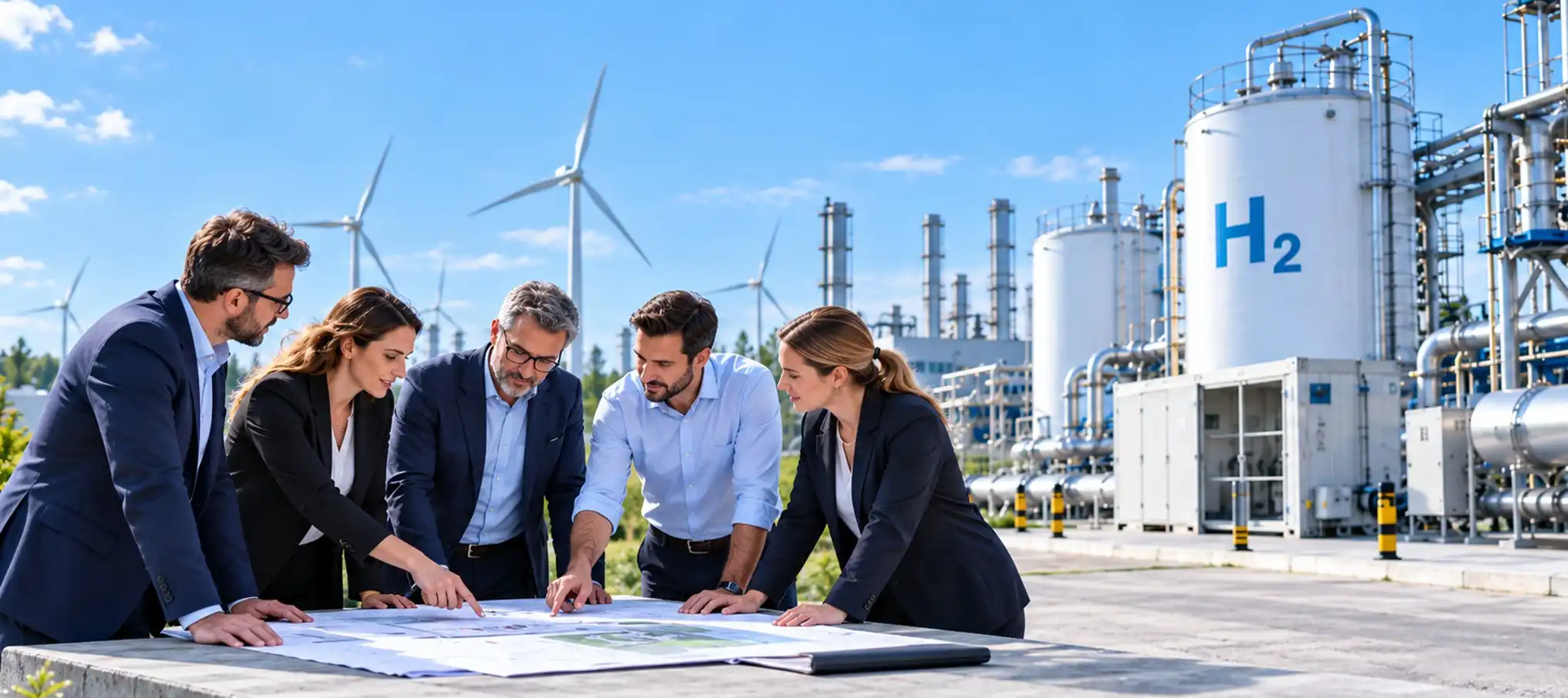
EMR H2-HUBs - Developing Industrial Transformation Pathways for a Hydrogen-Based Economy
As part of the Interreg project EMR H2-HUBs, we support municipalities, economic development organizations, and industrial companies across the Euregio Meuse-Rhine in accelerating the transition towards climate-neutral energy systems.
Together with regional partners including the cities and districts of Aachen, Düren, Heinsberg and further stakeholders, the project aims to develop company-specific transformation pathways and establish regional hydrogen and energy hubs through the aggregation of industrial demand.
Expected Results:
- Industrial Transformation Assessments: Conducted company-specific analyses of energy systems, production processes, and decarbonization potential to identify economically viable pathways towards renewable energy and hydrogen integration.
- Hydrogen Demand & Infrastructure Evaluation: Assessed future hydrogen demand, infrastructure requirements, and connection opportunities to emerging regional hydrogen networks to support long-term investment decisions.
- Business Case & Funding Analysis: Evaluated investment costs, operating costs, CO₂ reduction potential, and suitable funding opportunities to prioritize transformation measures and implementation pathways.
- Regional Hub Development: Aggregated company-level findings to establish sectoral and regional transformation hubs, enabling collaboration, knowledge exchange, and the identification of shared infrastructure opportunities.
- Implementation Roadmaps: Developed phased transformation roadmaps with concrete measures, strategic recommendations, and actionable next steps to support the transition towards a resilient and climate-neutral industrial ecosystem.

Center Fuel Cell Industrialization – Scaling-up the Hydrogen Economy
The Center Fuel Cell Industrialization aims to form the nucleus of an interdisciplinary community and act as an innovation hub for the industrialization of hydrogen and fuel cell technology in Germany and Europe:
- Market & Technology Monitoring: Providing in-depth insights into relevant market and technology developments in the fields of fuel cells and electrolyzers.
- Knowledge, Research, and Prototyping: Development of new stack or BoP designs for PEM fuel cells and electrolyzers, for example, to reduce production or material costs.
- Hydrogen Economy Community: Regular community exchange with market and technology experts from both the industry and research environment to discuss the latest trends and derive potential projects.

Development of an E-Mobility Strategy for a Medium-Sized Company in the Caravan Sector
The iterative project process comprises four key steps that ensure a systematic approach to project development and allow clients to continuously integrate feedback and make adjustments:
- Internal Analysis: Systematic recording and analysis of own skills & competences
- External Analysis: Analysis of the market and technology environment & alignment of the technol. future
- Development of a technology strategy
- Integrated technology planning: Development of a technology roadmap
In total, nine different fields of technology and innovation (e.g. propulsion systems "battery vs fuel cell", design of battery systems, innovative heating systems, etc.) were analyzed and evaluated based on company competencies.
Different scenarios (heat demand, electricity demand, power supply, etc.) were analyzed and a technology roadmap for the next 5 years was developed and prioritized with the top management.
Our Customers


Contact for
details


