Decentralized Energy Systems – Paradigm Shift in Sustainable Energy
Overview
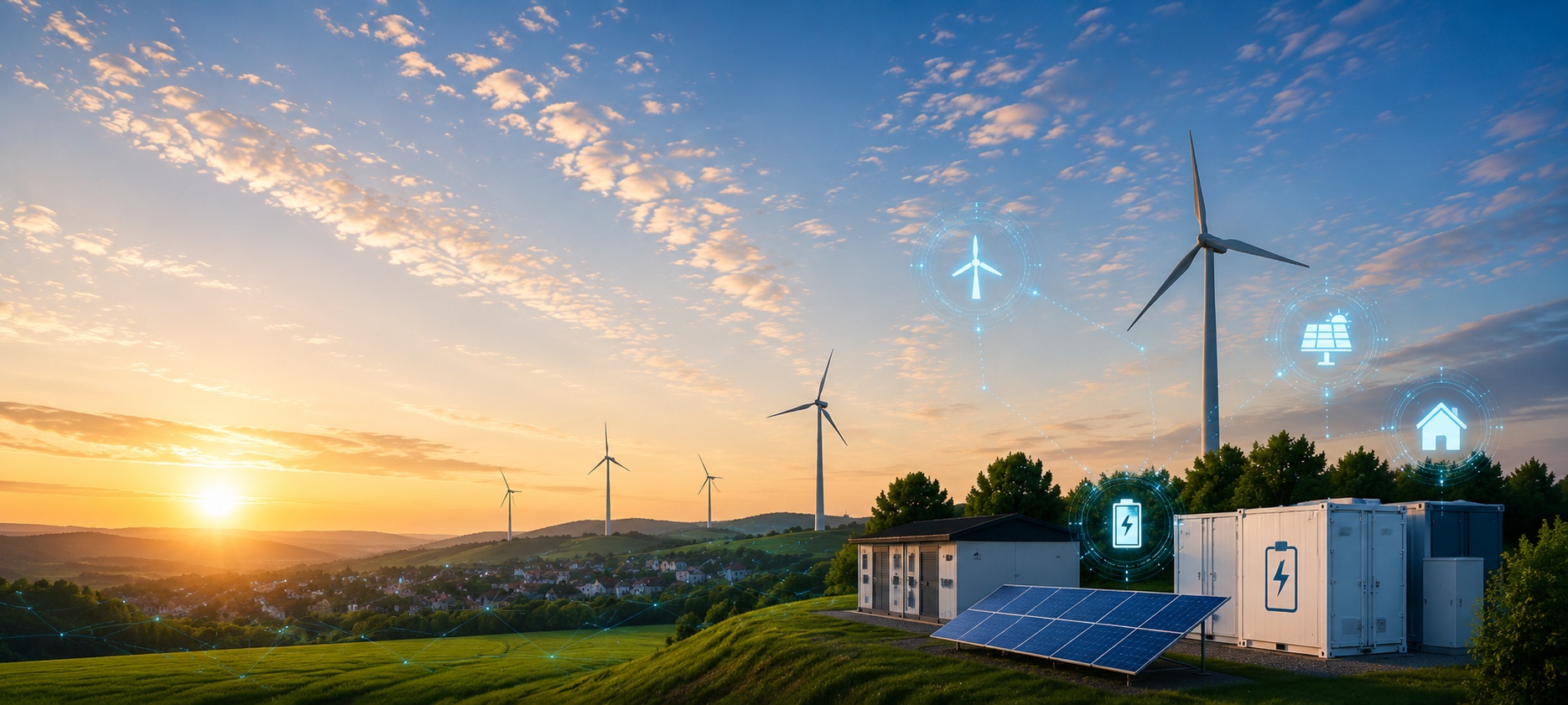
The globalenergy landscape is undergoing a fundamental transformation. Increasing energyprice volatility, grid constraints, and the rapid expansion of renewable energysources are driving the shift toward decentralized, modular energy systems.
Industrialcompanies are at the center of this transition. However, many component andtechnology providers still lack a clear understanding of:
- which future markets are emerging,
- how energy systems will be structured,
- and how their existing competencies can be positioned within these systems.
Thisconsortium project empowers companies to systematically identify their rolein future energy systems and translate technological capabilities into scalablemarket opportunities.
Why This Matters Now
Industrialenergy systems are reaching structural limits:
- Energy prices are becoming increasingly volatile and unpredictable
- Grid infrastructure expansion is lagging behind demand growth
- Renewable integration is creating new system complexity
- Brownfield environments restrict large-scale centralized solutions
As aresult, future energy systems will be:
- decentralized
- modular and containerized
- standardized instead of project-specific
- increasingly controlled by intelligent energy management systems
This shiftcreates new markets—but also new requirements for components andtechnologies.
Our Approach
We follow astructured, end-to-end methodology that links market dynamics to concretebusiness opportunities:

1. Market Stressors & Future Demand
Identificationand validation of key energy system stress scenarios
(e.g., price volatility, grid instability, retrofit constraints)
2. Application & Use Case Clustering
Developmentof structured industrial use-case archetypes based on:
- power demand
- energy form (electricity, heat, hydrogen)
- load profile
- Brownfield vs. Greenfield environments
3. System Architecture & Modular Building Blocks
Developmentof vendor-agnostic reference architectures combining:
- generation
- storage
- control & EMS
Focus: standardization,scalability, and modular design
4. Economics & Business Models
High-levelassessment of:
- CAPEX/OPEX structures
- flexibility value and resilience benefits
- comparison of centralized vs. decentralized solutions
5 . Market Entry & Ecosystem Roles
Definition of:
- roles across the value chain
- partnership models
- concrete follow-up opportunities such as pilotsor joint projects
What You Gain
Participationin the consortium enables companies to:
- Understand their future role in energy systems—not just as product suppliers
- Identify new markets and application fields
- Translate existing competencies into system-relevant solutions
- Gain a shared industry perspective on future system architectures
- Develop clear go-to-market strategies
- Accelerate from insight to concrete business opportunities
Who Should Join
Thisconsortium is specifically designed for:
- Component manufacturers (e.g., thermal, electrical, fluid systems)
- Technology providers (e.g., storage, power electronics, materials)
- Automation and control companies
- System-integrated solution providers
The projectis especially valuable for companies that:
- want to move from component supplier → system-relevant partner
- are exploring new markets in the energy transition
- need a structured approach to strategic positioning
Project Setup
- Project Format: Consortium Project
- Start: September 2026
- Duration:~4 months
- Structure: 5 analysis modules + interim workshops
Final Outcome: Consolidated results and strategic roadmap
Get Involved
If you areinterested in understanding how your company can become part of the nextgeneration of decentralized energy systems, we would be happy to discussthe project and your potential role.
Contact us to learn more about participationand consortium setup.
Related videos

Your Project Team

Daniel Führen
Daniel Führen is a highly experienced professional in technology and innovation management, specializing in diverse industries such as automotive, life sciences, materials, energy, and chemicals. His expertise includes hydrogen economy, sustainable production, additive manufacturing, and printed electronics. He excels in diversifying businesses, identifying new products and applications, and leading sustainable production projects. Daniel Führen currently serves as the Head of New Energy Systems at INC Innovation Center, with a Master's Degree in Physics from RWTH Aachen University.
Daniel Führen
Frank Burkard
Frank Burkard is an experienced professional in sustainable production and hydrogen technologies, with expertise in renewable energies, hydrogen infrastructure, and multidisciplinary project management. He has contributed to various initiatives within the hydrogen economy, connecting research, industry, and regional stakeholders to drive sustainable transformation. Frank currently serves as Senior Innovation Specialist for Sustainable Production at INC Innovation Center, focusing on innovative solutions for a climate-neutral future.